Flaxseed cold press: ≤40-50°C, ALA 50-60%, the most oxidation-sensitive oil
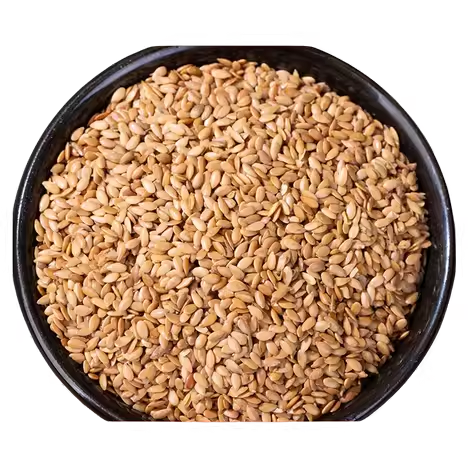
Flaxseed (linseed) hard data: oil 35-45%, moisture 6-9%, protein 18-22%, ALA 50-60% (highest omega-3 of common seeds). Smoke point only 107°C unrefined — cannot fry. Cold press ≤40-50°C end-to-end (lower than sesame's 60°C because ALA degrades fast). Yield 28-35%, residual cake oil 8-12%. Without N₂ + dark glass + cold storage, peroxide rises from <5 to >20 meq O₂/kg within 3 months. With dark glass 100-250 ml + N₂ headspace O₂ <2% + ≤15°C storage: shelf life 6-12 months (vs sesame 12-24 months).
Flaxseed cold press hard data: ≤40-50°C end-to-end, ALA (omega-3) 50-60%, smoke point 107°C, FFA <0.5%, peroxide <5 meq O₂/kg fresh (rises >20 within 3 months without N₂), shelf life 6-12 months in dark glass + N₂.
Cold-press discipline
≤40-50°C end-to-end (jacket water cooling), 200-355 ton hydraulic, 80-100 kg/barrel, 60-90 min cycle, yield 28-35%. Press time-stamped per batch. Above 50°C, ALA degradation starts to compromise nutritional claim.
Post-press protection
Crude oil → 1-5 μm bag filter (no heat, no air exposure) → settling tank with N₂ blanket O₂ <2% → cold storage ≤15°C → fill in 100-250 ml dark glass within 7-14 days. Each step under N₂.
Packaging protection
Dark amber/violet glass 100-250 ml (UV-block essential — clear glass shortens shelf life by 50%). Inline N₂ flush before capping → headspace O₂ <2%. Best-before 6-12 months, refrigerate after opening.
Cold-press spec
What a credible flaxseed cold-press claim requires
- Seed storage: cool (≤15°C ideal), dry (RH <70%), dark, FIFO rotation. Old seeds (>12 months from harvest) raise FFA above 1.0% and peroxide above 10 meq O₂/kg even before pressing.
- Press temperature: ≤40-50°C jacket (vs sesame ≤60°C). Water cooling on barrel during long 60-90 min cycle. Log per batch.
- Filtration: 1-5 μm bag filter immediately after pressing, under N₂ blanket. No plate-frame open-air filter — it doubles oxidation surface.
- Storage hold: 7-14 days max in jacketed tank with N₂ headspace before bottling. Longer than 14 days: peroxide rises measurably.
- Bottling: dark glass 100-250 ml + N₂ flush + cap torque 8-12 lb-in + cold-chain logistics. Best practice: refrigerated transport.
Oxidation chain
Why flaxseed oil degrades faster than sesame or peanut
ALA chemistry
Alpha-linolenic acid (C18:3 omega-3) has 3 double bonds → 10-25× more oxidation-prone than oleic (C18:1, peanut/almond) or linoleic (C18:2, sunflower). One unit ALA × heat × O₂ = 10× peroxide formation.
Filtration speed
Crude oil → bag filter in <2 h after pressing → tank in <4 h. Open-air settling for >24 h doubles peroxide. Close the filter housing under N₂ purge between uses.
Storage and cold chain
Tank: stainless 316L, N₂ blanket O₂ <2%, ≤15°C jacket. Bottle: dark glass 100-250 ml, N₂ flush. Logistics: refrigerated truck/container ideal; ambient acceptable for 6-month shelf life with strict O₂ control.
Project boundary
What to confirm before scoping Flaxseed Cold Press | ≤40°C, ALA 50-60%, Peroxide <5, Shelf Life 6-12 Months
Flaxseed Cold Press | ≤40°C, ALA 50-60%, Peroxide <5, Shelf Life 6-12 Months should not be quoted from an equipment name alone. Check feed lots, target oil, post-press handling, and packing rhythm in one scope before deciding which Flaxseed Oil Press modules stay. Factory cold-press page lists this oilseed — prioritize 355–500 (370–630 ton), pure press ~2 h/barrel.
When feed condition, moisture, impurities, batch weight, and product position are unclear, press tonnage and filter area become guesswork. Factory systems share 60 MPa and 2.2 kW motors; hot pure press is 30–40 min/barrel and cold pure press is ~2 h/barrel — cycle time matters more than brochure tonnage.
- Confirm whether feed is whole seed, kernels, pretreated material, or an existing semi-finished stream.
- Confirm whether the target is crude oil, filtered oil, bottled oil, drum ingredient oil, or a refining handoff.
- Hot cycle reference: pure press 30-40 min/barrel, ~1.5 h for 2 barrels with loading; cold pure press ~2 h/barrel, ~4.5 h for 2 barrels.
- Confirm batch rhythm, labor, changeover, retained samples, power (often 380V/50Hz/3ph), and site install conditions.
Factory model check
Match hot / cold models to factory hard data
When discussing Flaxseed Cold Press | ≤40°C, ALA 50-60%, Peroxide <5, Shelf Life 6-12 Months, pin models to published factory specs — not tonnage alone.
Hot 300/325: 300–325 ton, 60 MPa system, standard barrel Ø390×800 mm / max 100 kg, pure press 30–40 min/barrel, ~1.5 h for 2 barrels with loading, 2.2 kW motor. Cold 355/400/426/480/500: 370–630 ton, integrated frame, same 100 kg standard barrel, pure press ~2 h/barrel, ~4.5 h for 2 barrels with loading; optional Ø300 high-pressure barrel max 60 kg. Residual oil target ~≤5% (peanut hot often 6–8% measured).
- Standard barrel Ø390×800 mm, max ~100 kg crushed feed; optional Ø300 high-pressure barrel max ~60 kg.
- Cylinder material 27SiMn; cold frames are integrated molded steel; hot frames are typically H-type channel steel.
- Factory cold-press page lists this oilseed — prioritize 355–500 (370–630 ton), pure press ~2 h/barrel.
Equipment check
project scope needs to land in equipment interfaces
After Flaxseed Cold Press | ≤40°C, ALA 50-60%, Peroxide <5, Shelf Life 6-12 Months is clear, write the interfaces: how preparation feeds the press, how oil leaves the press, how filtration connects to tanks, and how packing receives finished oil.
Front-end input
Record feed form, daily volume, moisture, and sorting needs so pretreatment is not left to operators.
N₂, light protection, short shelf life
ALA oxidizes fast: closed filtration, N₂ tanks (O₂ <2%), dark glass 100–250 ml, plan batches for ~3–6 months refrigerated shelf life.
Delivery data
Prepare space, power (often 380V/50Hz/3ph), labor, target package, local rules, and acceptance method before quotation.
Questions to confirm next
Clear these up first
ALA (alpha-linolenic acid, C18:3 omega-3) makes up 50-60% of flaxseed oil. ALA has 3 double bonds vs sesame's mostly oleic + linoleic (1-2 double bonds). At 60°C, ALA oxidation rate is 5-10× higher than sesame. Industry premium flaxseed brands target ≤40°C; mainstream cold-press accepts ≤50°C. Above 50°C, peroxide value at bottling already exceeds 5 meq O₂/kg.
Read this next
These next pages move the discussion forward
Buying guides
Hydraulic vs Screw Oil Press for flaxseed: Which Fits Your Mill?
Compare hydraulic batch press vs continuous screw (expeller) for flaxseed: oil quality, cold-press ability, capacity, residual oil, labor, and when each route wins. Use this before you request a quote.
Continue →Buying guides
flaxseed Hydraulic Press Capacity: Barrels per Shift and How Many Presses
Size flaxseed hydraulic capacity with real cycles: hot pure press 30-40 min/barrel (~1.5 h for 2 barrels with loading); cold ~2 h pure / ~4.5 h for 2 barrels. Example math for 1–5 t/day small mills.
Continue →Buying guides
flaxseed Oil Press Inquiry Checklist: Data That Gets a Real Quote
RFQ checklist for flaxseed hydraulic oil press projects: seed form, kg/shift, hot/cold, filtration, cake path, power, country, and photos. Incomplete inquiries get catalog replies — complete packs get model counts and line scope.
Continue →Send this page's requirement to the factory
Bring feed condition, target output, and site constraints, and we will continue from what this page covers.