In China, start with the sales model — then pick the Flaxseed press
China has traditional linseed/flax oil regions (e.g. northwest) and modern health-food brands. Buyers need cold-press claims with real temperature discipline. 355–500 cold, no aggressive roasting, N₂ tanks, amber bottles. Reject warm storage of seed >6 months without climate control.
How to choose a hydraulic flaxseed oil press in China: local market, business model (shop / batch mill / bulk), recommended press class, and data to send before a quote.
Local market
China has traditional linseed/flax oil regions (e.g. northwest) and modern health-food brands. Buyers need cold-press claims with real temperature discipline.
Recommended route
355–500 cold, no aggressive roasting, N₂ tanks, amber bottles. Reject warm storage of seed >6 months without climate control.
Core positioning
Hydraulic flaxseed pressing: batch identity, hot or cold route, cake value, scalable by adding presses.
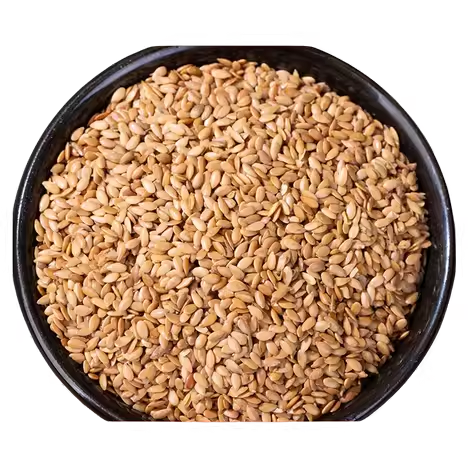
Decide first
Three China business models
Retail / shop batch
One compact hydraulic press, visible oil quality, sells on freshness. Lowest capex.
Branded batch mill
Clean/prep + 300/325 or 355–500 + filtration + optional fill. Fits retail bottles and export packs.
Continuous bulk
Screw/expeller when daily tons dominate over flavor and cold-press claims.
Quote pack
What to send for a China Flaxseed quote
- kg seed per shift and hours per shift.
- Hot or cold route; retail bottle vs bulk drum.
- Existing cleaners/roasters/filters and power supply.
- Country install city and whether export docs are needed.
- Photos of seed and workshop.
Project boundary
What to confirm before scoping Hydraulic Flaxseed Oil Press in China: Buyer Guide for Shop, Mill, and Export
Hydraulic Flaxseed Oil Press in China: Buyer Guide for Shop, Mill, and Export should not be quoted from an equipment name alone. Check feed lots, target oil, post-press handling, and packing rhythm in one scope before deciding which Flaxseed Oil Press modules stay. Factory cold-press page lists this oilseed — prioritize 355–500 (370–630 ton), pure press ~2 h/barrel.
When feed condition, moisture, impurities, batch weight, and product position are unclear, press tonnage and filter area become guesswork. Factory systems share 60 MPa and 2.2 kW motors; hot pure press is 30–40 min/barrel and cold pure press is ~2 h/barrel — cycle time matters more than brochure tonnage.
- Confirm whether feed is whole seed, kernels, pretreated material, or an existing semi-finished stream.
- Confirm whether the target is crude oil, filtered oil, bottled oil, drum ingredient oil, or a refining handoff.
- Hot cycle reference: pure press 30-40 min/barrel, ~1.5 h for 2 barrels with loading; cold pure press ~2 h/barrel, ~4.5 h for 2 barrels.
- Confirm batch rhythm, labor, changeover, retained samples, power (often 380V/50Hz/3ph), and site install conditions.
Factory model check
Match hot / cold models to factory hard data
When discussing Hydraulic Flaxseed Oil Press in China: Buyer Guide for Shop, Mill, and Export, pin models to published factory specs — not tonnage alone.
Hot 300/325: 300–325 ton, 60 MPa system, standard barrel Ø390×800 mm / max 100 kg, pure press 30–40 min/barrel, ~1.5 h for 2 barrels with loading, 2.2 kW motor. Cold 355/400/426/480/500: 370–630 ton, integrated frame, same 100 kg standard barrel, pure press ~2 h/barrel, ~4.5 h for 2 barrels with loading; optional Ø300 high-pressure barrel max 60 kg. Residual oil target ~≤5% (peanut hot often 6–8% measured).
- Standard barrel Ø390×800 mm, max ~100 kg crushed feed; optional Ø300 high-pressure barrel max ~60 kg.
- Cylinder material 27SiMn; cold frames are integrated molded steel; hot frames are typically H-type channel steel.
- Factory cold-press page lists this oilseed — prioritize 355–500 (370–630 ton), pure press ~2 h/barrel.
Equipment check
By Country needs to land in equipment interfaces
After Hydraulic Flaxseed Oil Press in China: Buyer Guide for Shop, Mill, and Export is clear, write the interfaces: how preparation feeds the press, how oil leaves the press, how filtration connects to tanks, and how packing receives finished oil.
Front-end input
Record feed form, daily volume, moisture, and sorting needs so pretreatment is not left to operators.
N₂, light protection, short shelf life
ALA oxidizes fast: closed filtration, N₂ tanks (O₂ <2%), dark glass 100–250 ml, plan batches for ~3–6 months refrigerated shelf life.
Delivery data
Prepare space, power (often 380V/50Hz/3ph), labor, target package, local rules, and acceptance method before quotation.
Questions to confirm next
Clear these up first
355–500 cold, no aggressive roasting, N₂ tanks, amber bottles. Reject warm storage of seed >6 months without climate control.
Read this next
These next pages move the discussion forward
By Country
Hydraulic Flaxseed Oil Press in Canada: Buyer Guide for Shop, Mill, and Export
How to choose a hydraulic flaxseed oil press in Canada: local market, business model (shop / batch mill / bulk), recommended press class, and data to send before a quote.
Continue →By Country
Hydraulic Flaxseed Oil Press in Germany: Buyer Guide for Shop, Mill, and Export
How to choose a hydraulic flaxseed oil press in Germany: local market, business model (shop / batch mill / bulk), recommended press class, and data to send before a quote.
Continue →By Country
Hydraulic Flaxseed Oil Press in India: Buyer Guide for Shop, Mill, and Export
How to choose a hydraulic flaxseed oil press in India: local market, business model (shop / batch mill / bulk), recommended press class, and data to send before a quote.
Continue →WhatsApp your China project numbers
Include Flaxseed, kg/shift, hot/cold, and city in China.